China copies. America builds. Europe regulates.
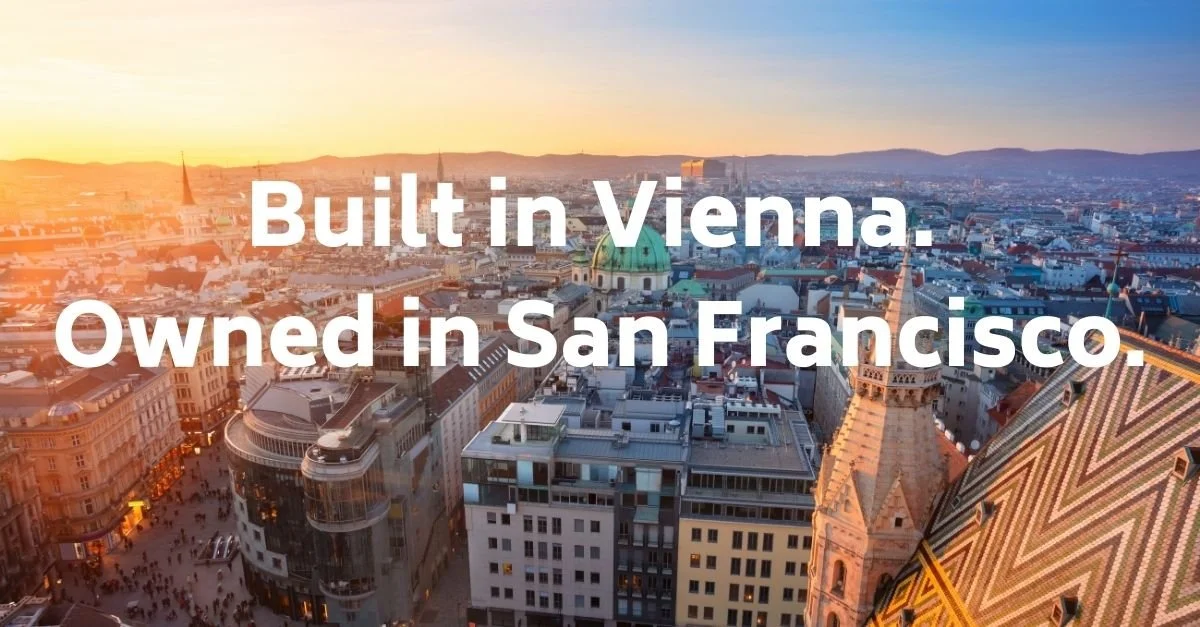
Vienna, 1925. San Francisco, 2025.
Executive Summary: Europe has lost its best minds before. Freud. Wittgenstein. Reich. It took decades to recover. Today the pattern is repeating — and the answer is not a visa policy. It is an ownership decision. That decision belongs to you.
By Werner Sattlegger — Art of Life · Vienna & Silicon Valley · February 2026
What is all about
I was in San Francisco last mont, I am there regularly — and I am equally present in Vienna, Klagenfurt, Stuttgart, Zurich — with owners and executives who know that something fundamental is changing, but are not yet certain how to respond.
I live in both worlds. That is precisely what makes me simultaneously optimistic — and unsettled.
What I experience repeatedly in the Valley: energy, speed, a readiness to build before everything is regulated. What I experience in Europe: enormous knowledge, enormous industrial depth — and a caution that is sometimes a virtue, and sometimes a paralysis.
And in between: people who leave.
We Have Seen This Before
Vienna, early twentieth century. The intellectual capital of Europe. Freud develops psychoanalysis here. Wittgenstein writes the Tractatus. Wilhelm Reich, Alfred Adler, Karl Popper, Fritz Perls, Paul Feyerabend, Paul Watzlawick and many more — a concentration of thinkers without parallel - Vienna was known as the Silicon Valley of Europe.
Then they had leave. Not all for the same reasons. Some flee fascism. Some flee the narrowness. Some simply because London, New York, or Cambridge offer an environment that Vienna is not prepared to create. What stays in Vienna are the institutions — the university, the academies, the coffeehouses. What leaves is the generative force: the energy from which new fields of knowledge emerge.
Austria recovers. But it takes decades.
I think of this period often when I see the story around Peter Steinberger ( Openclawd) — one of Austria's most thoughtful and rigorous AI thinkers, someone who not only talks about artificial intelligence but understands it, contextualises it, and describes it with a honesty that has become rare. He is moving to San Francisco.
Not because Austria is driving him out. Because San Francisco is drawing him in. That distinction matters. And it makes the situation not simpler — it makes it more complicated.
The Paradox: Europe Produces — America Keeps
The numbers are, at first glance, confusing.
Europe produces roughly 30% more AI talent per capita than the US, and nearly three times more than China. Our universities are excellent. Our engineers are sought after worldwide — that is the problem.
What the research shows:
Europe produces roughly 30% more AI talent per capita than the US, and nearly 3× more than China — yet records a significant net outflow of senior professionals. (Interface, 2024)
Germany exports large numbers of AI professionals to the US and UK. France loses more AI talent than it gains. Switzerland attracts regional talent — and still loses its most senior people to American institutions. (Euronews, Jan 2026)
57% of AI professionals in Europe completed their undergraduate studies outside Europe — versus 38% in the US. Europe is drawing global talent in. Then losing it onward to America. (Interface, 2024)
Net tech inflows to Europe fell from 52,000 in 2022 to 26,000 in 2024 — halved in two years. (Atomico State of European Tech, 2025)
US AI startups raised $146 billion in 2024. European AI startups raised $14 billion. (Atomico / Sifted, 2025)
30% of European startups at Series C and beyond relocate their headquarters outside Europe. Once they leave, they rarely return. (Atomico, 2025)
What we are experiencing is not a production problem. It is a retention problem. Europe trains — America harvests.
And anyone who thinks: this does not affect me, I am not a tech company — is underestimating what is happening. The next wave of AI transformation does not hit software. It hits industry. Mechanical engineering. Packaging production. Logistics. The chemical sector. Exactly the sectors where Europe is strong. And exactly there, AI-capable leadership will determine competitiveness in the next five years.
Why They Leave — And Money Is Only Part of the Answer
I have had many conversations over recent years — with founders who left, with engineers who are considering it, with leaders who stayed and sometimes wonder why.
Yes, compensation plays a role. AI engineers in the US earn 30–70% more. But that is never the only reason. Most of the time it is not even the primary one.
What talent at the frontier actually follows:
Consequence — the conviction that what you build genuinely matters
Speed — the decision made today is executed tomorrow, not in six months
Upside — meaningful participation in the value you create
Ambition ceiling — an environment ambitious enough to draw out your best
Compute & infrastructure — frontier research, capital, and commercial application under one roof
In Europe I experience — and I say this with genuine affection for this continent — too often the opposite. Excellent people in organisations that decide too slowly. The right knowledge in structures that cannot deploy it. Talent waiting for conditions to be right, instead of creating the conditions.
Friction is not neutral. Every layer of ambiguity in an organisation is a quiet argument for the next offer from abroad.
What Europe Does Better — And I Say This Without Nostalgia
This is where analysis usually goes soft. I want to resist that.
Europe has structural advantages that Silicon Valley cannot buy — regardless of how much venture capital it deploys.
Industrial Depth. Thirty-year customer relationships. The knowledge of how a stamping press actually works under pressure. Quality embedded across generations. This contextual knowledge is the raw material from which the best AI applications are built — and Europe possesses it in a density that is globally unique. Silicon Valley cannot manufacture this.
Earned Trust. European industrial companies have built something no startup can replicate: reliability across decades. AI systems operating within this trust framework carry a legitimacy that purely American products must earn slowly and expensively.
Regulatory Intelligence. Europe regulates early — which is sometimes paralyzing. But for companies serving global customers, GDPR compliance and EU AI Act readiness is not a disadvantage. It is a quality signal. Companies that understand this early hold a real competitive lead.
The problem is not that Europe lacks these advantages. The problem is that too few owners and executives deploy them offensively as competitive assets. Instead, they are managed defensively.
Three Decisions — Not Principles, But Actions
Most of the owners and executives I speak with know that something must change. What is missing is not insight. What is missing is the willingness to make a concrete decision. Those who wait lose — quietly, gradually, and in the end irreversibly.
I — Redesign Upside
When AI talent in America receives substantial equity in what it builds — and European talent receives a salary and the prospect of a bonus — the outcome of that comparison is not difficult to predict. Ownership attracts ownership. The people who build consequential things want to feel the consequence of what they build.
This means concretely: Anyone serious about building AI capability must introduce ownership models that remain rare in European industrial companies today. Not a token gesture — a real stake in what is created.
II — Halve Decision Speed
The best AI leaders do not leave organisations because of poor culture. They leave because of paralysis. Too many layers, too many approval loops, too great a distance between idea and execution. Builders do not only leave for money — they leave for speed. They leave when the gap between their capability and their authority becomes demoralising.
This means concretely: Which decision that currently takes three weeks could be made in three days — if responsibility were genuinely delegated?
III — Make Consequence Visible
Strong people want to work in organisations where responsibility and authority align. Where it is clear who decides what. Where outcome and person are connected. When autonomy scales without clarity of consequence, talented people disengage. When consequence is clear and authority is real, strong people step forward.
This means concretely: Anyone who cannot say in one sentence who is responsible for the AI outcome in their organisation — has not yet made that decision.
What Moves Me Personally
I am not writing this as a neutral observer. I am Austrian. And this question does not leave me alone — because I know what is at stake.
Not only economically. Value creation is one thing. But what concerns me more deeply is the question of what a country becomes when its most capable and courageous minds systematically go elsewhere. Vienna in the 1920s and 1930s experienced this. What was then philosophy and psychology is today artificial intelligence. The pattern is the same.
I carry no illusions that an essay changes this. But I believe that the people who can change it — the owners, the entrepreneurs, the executives — must make this decision themselves. Not because the state demands it of them. But because they understand what is currently at stake.
Peter Steinberger's decision is not tragic. It is rational. And that is precisely what makes it a question for all of us: What are we building — so that the next rational decision is: I stay?
The answer is not a visa policy. Not tax reform. Not research funding.
The answer is an ownership decision. And that decision belongs to you.
If this essay resonated — there are two ways to go deeper.
The Silicon Valley Executive Learning Journey takes place June 8–12, 2026. Seven leaders. Five days inside the organisations building the AI tools that will define the next decade. Not a conference. A working visit.
The Circle of 7 is a small group of European owners and executives who meet regularly throughout the year — to think through what AI means for their organisations, their industries, and their leadership. Seven people maximum. Confidential by design.
Both are built on the same conviction that drove this essay: the decisions that matter are not made at conferences. They are made in small rooms, by people willing to think clearly and act decisively.
If either feels relevant — I would be glad to hear from you.
Werner Sattlegger office@the-art-of-life.at · www.the-art-of-life.at
Sources & Further Reading
Atomico — State of European Tech 2025 — The definitive annual survey of European tech: talent flows, funding, founder sentiment. → stateofeuropeantech.com
Euronews — The AI Brain Drain: Why Europe Can't Keep the Talent It Trains (January 2026) — Country-by-country breakdown. Germany, France, Switzerland: who loses most and why. → euronews.com
Interface (Berlin) — Solving Europe's AI Talent Equation (2024) — Core finding: Europe does not have an attraction problem. It has a retention problem. → interface-eu.org
Interface — Where Is Europe's AI Workforce Coming From? (2024) — LinkedIn dataset analysis of AI professional migration. 57% of European AI professionals studied outside Europe. → interface-eu.org
vktr.com — America's AI Brain Drain Threatens Its Global Lead (2025) — US immigration and research policy shifts are beginning to push AI talent away from America. Europe's window. → vktr.com
Sifted — 10 Key Findings from Atomico's State of European Tech (2025) — Accessible summary with commentary on talent, funding gaps, and founder sentiment. → sifted.eu
Emerald / Kybernetes — Brain Drain and Government AI Readiness in the EU (2024) — Academic study quantifying the negative impact of brain drain on national AI readiness across EU member states. → emerald.com
bursa.ro — The Silent Exodus of the AI Elite (2026) — How Europe is subsidising America's tech future, and what EU institutions are attempting in response. → bursa.ro

Autor: Werner Sattlegger
Founder & CEO Art of Life
Experte für digitale Entwicklungsprozesse, wo er europäische mittelständische Familien- und Industrie-unternehmen von der Komfort- in die Lernzone bringt. Leidenschaftlich gerne verbindet er Menschen und Unternehmen, liebt die Unsicherheit und das Unbekannte, vor allem bewegt ihn die Lust am Gestalten und an Entwicklung.